For watch enthusiasts and budding horologists, repairing and maintaining watches can be an incredibly rewarding hobby. Whether you’re fixing a family heirloom, customizing a watch, or simply indulging in your love for fine timepieces, having the right tools is absolutely essential. In this article, we’ll delve into the essential toolkit that every watch repair enthusiast should consider.
1. Watchcase Opener
One of the first tools you’ll need is a watchcase opener. These come in several designs, including battery hatch openers and case back openers. The choice between a simple knife-type opener and a specialized tool depends on the type of watches you plan to work on. A good watchcase opener will allow you to access the inner workings of a watch without damaging the case.
Why It’s Important
Many watches use a press-fit back that requires careful handling, and using the right tool ensures you won’t scratch or disfigure the case while trying to open it.
2. Screwdriver Set
A quality set of miniature screwdrivers is pivotal for watch repair. Most watches contain tiny screws, and having a range of sizes ensures that you can tackle any job. It’s wise to invest in screwdrivers that have magnetic tips to avoid dropping these tiny screws—losing one can be a frustrating setback.
Features to Look For
Look for a set that includes Phillips and flat-head screwdrivers, with a comfortable grip for easy maneuverability. Precision is key!
3. Tweezers
Watch repair requires a surgical level of precision, and a pair of fine-tipped tweezers is indispensable. These are perfect for handling small parts, such as gear wheels and springs, without the risk of losing grip or damaging components.
Best Materials
Opt for anti-magnetic stainless steel tweezers, as they can effectively handle delicate parts without influencing their functionality.
4. Loupe and Magnification Tools
The intricate components of a watch can be difficult to see with the naked eye. A loupe or magnifying glass can greatly enhance your ability to inspect and repair components. These tools allow you to examine the watch mechanism closely, making it easier to identify issues.
Options to Consider
You can choose from handheld loupes, headband magnifiers, or even magnifying lamps for a workspace enhancement. Each serves a slightly different purpose based on your comfort and specific needs.
5. Movement Holder
To work on a watch movement, you’ll need a movement holder. This tool secures the delicate mechanism while you work, preventing any movement that could lead to damage. Many holders adjust to fit various sizes of movements.
Advantages
Using a movement holder keeps your workspace organized and efficient, allowing you to focus entirely on the repair process.
6. Pliers
Pliers have a multitude of applications in watch repair—from adjusting links in a bracelet to handling springs. Needle-nose pliers and flat-nose pliers are especially useful for tasks that require a firm yet delicate grip.
Recommendations
Choose pliers with rubberized handles for extra grip and comfort during lengthy repair sessions.
7. Lubricants
Watch movements require lubrication to function smoothly. Using the right type and amount of lubricant can extend the life of your watch and improve its accuracy. It’s crucial to use precision lubrication oils specifically designed for watches.
Important Considerations
Research the different types of lubricants available and understand where and how to apply them, as improper application can affect movement.
8. Oilers
An oiler is an essential tool used to apply watch oils to specific parts of the mechanism. These come in various sizes and allow for precise application without overloading components with lubricant.
Tips for Using Oilers
Practice makes perfect when it comes to using an oiler. Start with less critical parts to build your skills before moving on to more significant components.
9. Case Back Remover Tool
This tool is specifically designed to safely remove the case back from various types of watches. There are different designs available, including those for screw-down backs and snap-on backs.
Why Invest in a Quality Tool?
Investing in a quality case back remover will prevent damage to your watch and allow for easier servicing in the future.
10. Simulated Spring Bar Tool
Spring bars secure the watch strap to the case. A spring bar tool will help you remove and replace straps effortlessly, facilitating changes to your watch style without the need for elaborate procedures.
Features to Look For
A two-ended design is often ideal, providing a fork side for removal and a pointed end for inserting or pushing bar ends.
11. Cleaning Kit
To preserve your timepieces, a cleaning kit is essential. This kit generally includes brush tools, compressed air, and cleaning solutions designed for watches. Keeping both the internal and external components clean can make a noticeable difference in the performance and longevity of your watches.
Components of a Cleaning Kit
- Soft brushes for delicate components
- Cloth wipes safe for watch surfaces
- Non-abrasive cleaning solutions
12. Watch Press
If you’re dealing with watches that have a sealed case, a watch press is beneficial for properly resealing the case after repairs. This tool is essential for ensuring that the water resistance is maintained.
Practical Tip
Familiarize yourself with the specific press techniques for different types of cases to ensure you seal them correctly and safely.
13. Storage Boxes
As you accumulate tools and parts, organization becomes crucial. Investing in small storage boxes or trays can help keep your workspace neat and your components easily accessible. Choose boxes with compartments for different parts to avoid confusion.
Benefits of Organization
Good organization not only saves you time but also helps in preventing losses and damage to tiny parts.
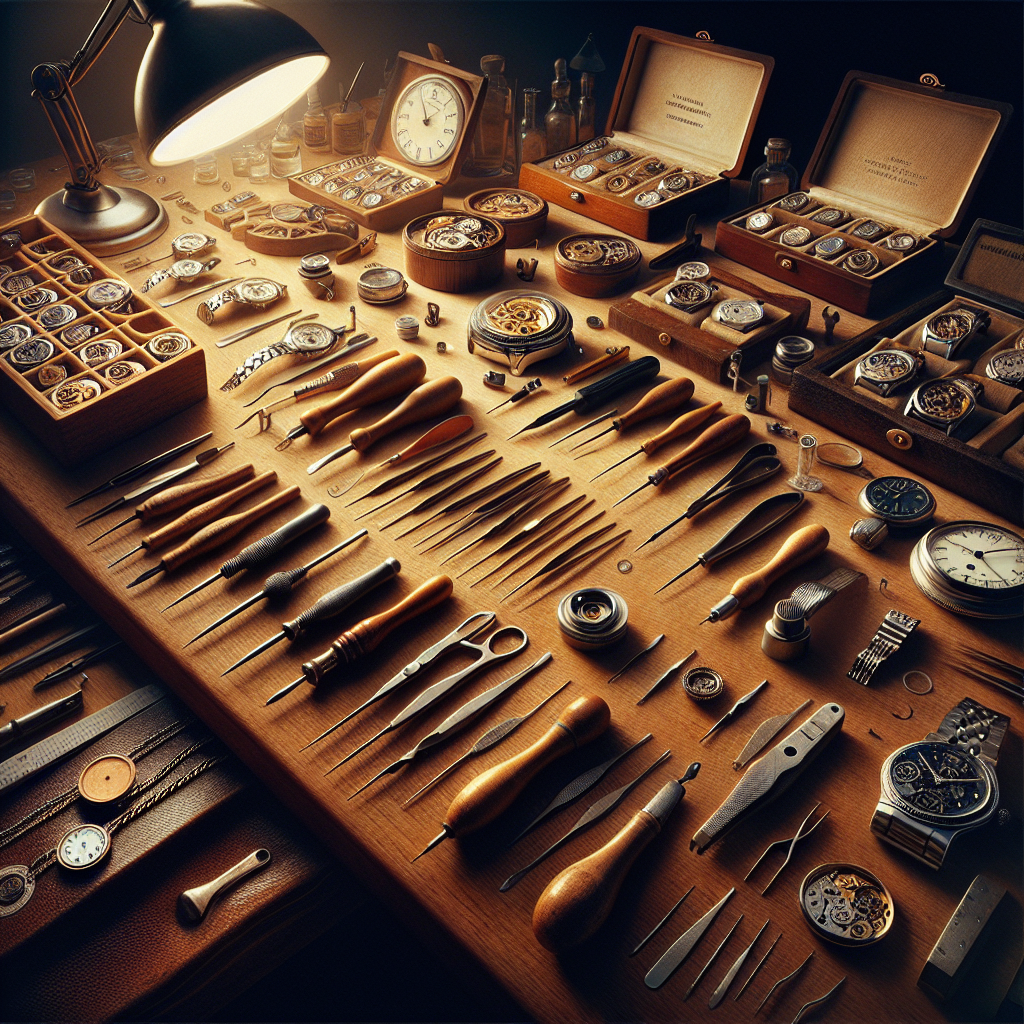
14. Watchmaker’s Workbench
While this is more of a luxury than a necessity, having a dedicated workbench for watch repairs is an excellent investment. A customizable workbench can allow for better posture and focus during repairs.
Considerations for a Workbench
A good workbench should have ample surface area, good lighting, and storage options for tools and components.
Conclusion
Arming yourself with the right toolkit is essential for any watch repair enthusiast. Each tool plays a crucial role in ensuring that your repairs are carried out effectively and with precision. Whether you are just beginning or looking to refine your skills, having these tools at your disposal will improve your experience and the outcome of your projects. Start with the basics, and as you gain experience, you can invest in more specialized tools to further your hobby. Happy repairing!