In a world increasingly dominated by digital devices, automatic watches stand as a testament to human ingenuity and tradition. These mechanical marvels have intrigued watch enthusiasts and casual wearers alike, combining precision engineering with intricate artistry. The craftsmanship that goes into creating these timepieces is a blend of science, art, and history, making them not just instruments for telling time, but also cherished heirlooms.
The Origins of Automatic Watches
The journey of automatic watches began in the 18th century with the advent of pocket watches. The first self-winding mechanism was developed in 1778 by the Swiss watchmaker Abraham-Louis Perrelet, who invented a device that utilized the motion of the wearer’s arm to wind the mainspring. However, it wasn’t until the late 1920s and early 1930s that automatic watches became mainstream, primarily due to innovations by brands such as Rolex and Vacheron Constantin.
The hallmark of an automatic watch is its self-winding mechanism, which uses the natural motion of the wrist to power the watch. This ingenious design eliminated the need for winding the watch manually, making it a popular choice for daily wear.
The Anatomy of an Automatic Watch
The inner workings of an automatic watch are incredibly complex, comprising numerous components that work in harmony to ensure accurate timekeeping.
1. Movement
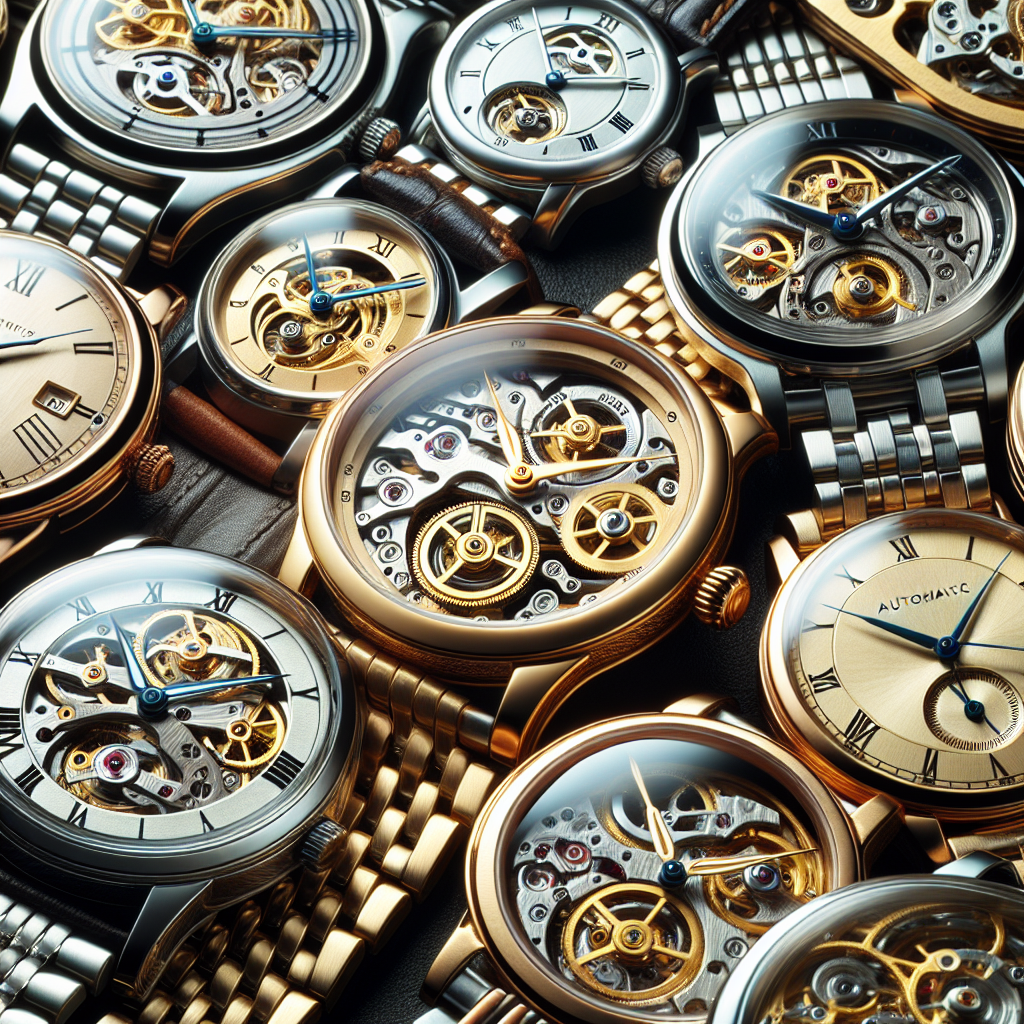
At the heart of any automatic watch is its movement, or caliber. The term “caliber” refers to the specific model or design of the watch’s internal mechanism. Most automatic movements are either Swiss-made or Japanese-made, with the Swiss movements typically being associated with luxury and precision craftsmanship.
The movement’s parts include:
- Gear Train: This is the system of gears that transmits power from the mainspring to the escapement.
- Escapement: By controlling the release of energy from the mainspring, the escapement regulates the watch’s ticking motion.
- Balance Wheel: This crucial component oscillates at a consistent rate, ensuring the watch keeps accurate time.
2. Rotor
A distinctive feature of automatic watches is the rotor—a semi-circular metal piece that moves as the wearer’s wrist moves. The rotor’s movement winds the mainspring, storing energy that powers the watch. The beauty of the rotor’s design often reflects the brand’s style, and many high-end watches feature lavishly decorated rotors that can be admired through the case back.
3. Dial and Hands
The dial of an automatic watch is an opportunity for craftsmanship that combines legibility with artistry. From classic Roman numerals to modern minimalist designs, each watch dial tells its own story. The hands, which sweep across the dial, are often meticulously crafted and can vary in shape and finish, adding to the visual appeal of the watch.
4. Case and Crystal
The case of an automatic watch serves to protect its delicate inner workings, and it comes in a variety of materials, such as stainless steel, gold, or titanium. A well-crafted case is not only functional but also contributes significantly to the watch’s aesthetic. The glass, or crystal, that covers the dial can be made from mineral glass, synthetic sapphire, or even antique acrylic, again showcasing the craftsmanship that characterizes the watch.
The Art of Craftsmanship
The craftsmanship behind automatic watches is a meticulous process that demands years of training and expertise. Master watchmakers undergo rigorous apprenticeships, often lasting several years, to learn the intricacies of watchmaking. Skills such as hand-finishing, striking, and assembly require a steady hand, keen eyesight, and a deep understanding of mechanics.
1. Hand-Finishing
High-end automatic watches often feature hand-finished components, which elevate their status as luxury items. This process can include polishing, engraving, and even the application of Côtes de Genève—a decorative technique that creates a beautiful striped pattern on the movement’s surfaces.
2. Assembly
The assembly of an automatic watch is a painstaking process. Each component must be carefully fitted and adjusted to ensure seamless functionality. A watchmaker must often disassemble and reassemble the watch multiple times to achieve the desired level of accuracy and performance.
3. Quality Control
Before an automatic watch leaves the workshop, it undergoes rigorous quality control checks. This includes testing for timekeeping accuracy, power reserve, and water resistance. Some brands even subject their watches to extreme conditions to ensure they can withstand the rigors of everyday use.
The Importance of Tradition
In an age where technology is ever-evolving, the tradition of automatic watchmaking stands firm. Many prestigious watch brands continue to uphold centuries-old techniques while also integrating modern technology to enhance precision and functionality.
1. Heritage Brands
Brands like Patek Philippe, Audemars Piguet, and Jaeger-LeCoultre have a rich history dating back to the 19th century. These manufacturers remain committed to maintaining traditional craftsmanship while pushing the boundaries of design and engineering.
2. Independent Watchmakers
In addition to luxury brands, independent watchmakers are carving out a niche in the industry, creating unique pieces that often take years to develop. They embody the spirit of craftsmanship, often working alone or with small teams to produce limited edition pieces that highlight individual creativity.
The Future of Automatic Watches
While the landscape of watchmaking continues to evolve, the allure of automatic watches remains timeless. As smartwatches gain popularity, traditional watchmakers have adapted by incorporating advanced materials and technology into their designs while staying true to their craftsmanship.
1. Sustainability
Growing awareness of sustainability has compelled watchmakers to source materials responsibly and adopt eco-friendly practices. Brands are experimenting with materials like recycled metals and sustainable leathers, showing that tradition can coexist with modern values.
2. Customization
More consumers are seeking personalized products. Some watch brands now offer customization options, allowing buyers to select case materials, dials, and straps. This trend not only honors the craftsmanship behind watches but also makes them more meaningful to the wearer.
Conclusion
The craftsmanship behind automatic watches is a rich tapestry woven from history, tradition, and artistry. These mechanical wonders not only serve the practical purpose of telling time but also embody a legacy of craftsmanship that transcends generations. Whether through the meticulous assembly of components, the artistic design of dials, or the intricate workings of the movement, automatic watches continue to captivate and inspire. As we move further into an increasingly digital world, these timeless treasures remind us of the beauty of human skill and the importance of tradition in creating products that are as functional as they are beautiful.