Watches are more than just tools for telling time; they’re statements of style, symbols of craftsmanship, and, for many, sentimental heirlooms. Over time, even the most robust timepieces can face wear and tear. Instead of discarding or sending your cherished watch to a professional for costly repairs, you can restore its former glory with a little DIY spirit. In this guide, we’ll delve into everything you need to know about watch repair, from basic tools and techniques to specific projects that can rejuvenate your timepiece.
Understanding the Basics of Watch Mechanics
Before diving into repair, it’s essential to understand the basic components of a watch. Most watches consist of:
- Movement: The heart of the watch, which keeps time. Movements can be mechanical (manual or automatic) or quartz (battery-operated).
- Case: The protective shell that houses the movement, usually made of metal or plastic.
- Crystal: The transparent cover that protects the dial. It can be made of glass, acrylic, or synthetic sapphire.
- Dial: The face of the watch that displays the time and often includes additional features such as date or chronograph functions.
- Strap or Bracelet: The band that holds the watch to your wrist, made of various materials like leather, metal, or rubber.
Familiarizing yourself with these components will make the repair process more intuitive.
Essential Tools for Watch Repair
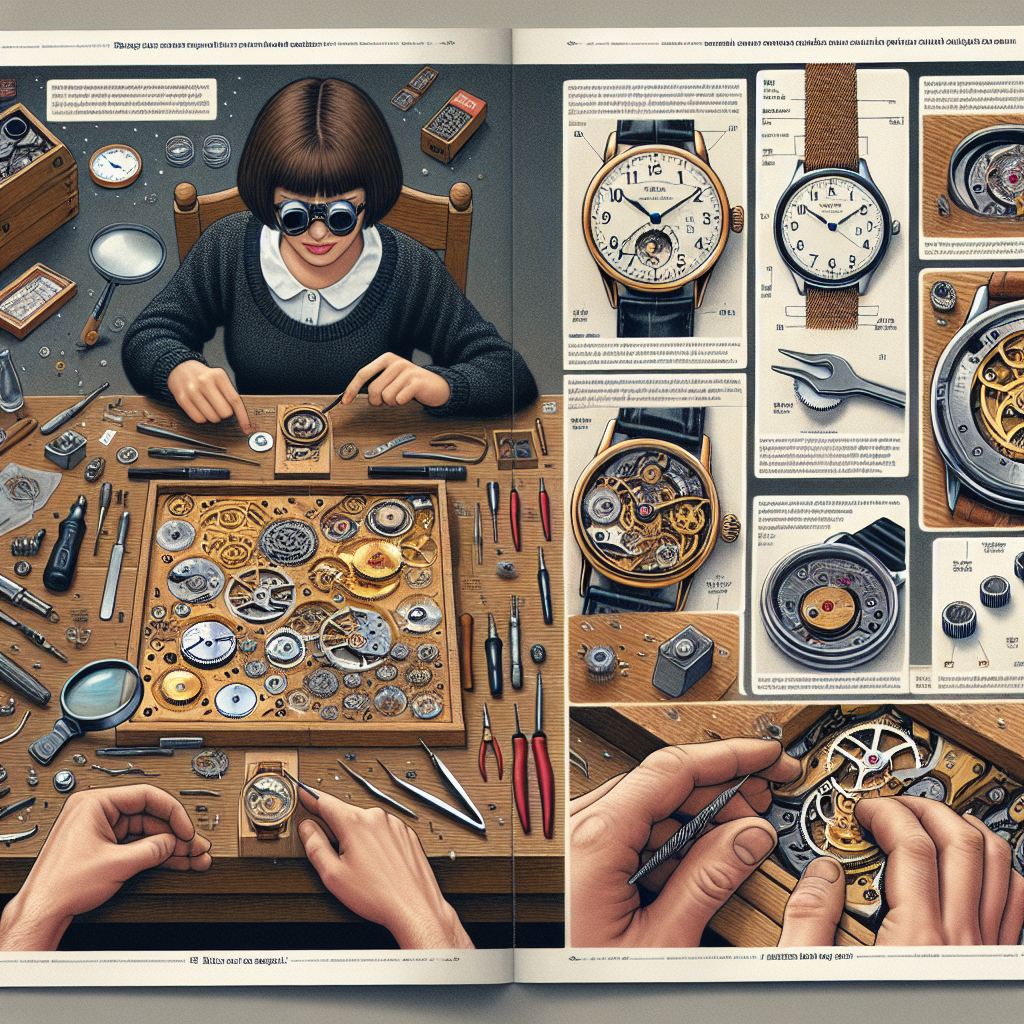
A successful DIY watch repair depends largely on having the right tools. Here’s a list of essential equipment to have on hand:
- Watch Case Opener: Vital for accessing the inner mechanics of your watch.
- Screwdrivers: A set of precision screwdrivers (often Phillips and flathead) will help with various screws found in the watch.
- Tweezers: Fine, non-magnetic tweezers are ideal for handling small parts without causing damage.
- Case Back Remover: Necessary for removing different types of case backs, whether screw-down or snap-on.
- Movement Holder: A device that secures the watch movement during repairs, preventing any unintentional damage.
- Loupe or Magnifying Glass: Essential for inspecting tiny components and ensuring precise placement and alignment.
- Pliers: Useful for bending and adjusting metal parts, especially in strap replacements.
Common Issues and How to Fix Them
1. Replacing the Battery
For quartz watches, a dead battery is one of the most common issues. Here’s a step-by-step guide for replacing it:
- Tools Needed: Case opener, tweezers, replacement battery.
- Process:
- Use the case opener to carefully remove the watch case back.
- Gently lift the battery from its compartment using tweezers.
- Insert the new battery, ensuring the correct polarity.
- Replace the case back, ensuring a snug fit.
2. Adjusting the Watch Band
A loose or tight watch band can be uncomfortable. Here’s how to adjust a metal link band:
- Tools Needed: Screwdriver or pliers, link removal tool (if needed).
- Process:
- Identify which links need removal.
- Use the screwdriver or removal tool to push out the pins connecting the links.
- Remove the necessary number of links.
- Reconnect the remaining links, ensuring the pins are securely in place.
3. Fixing a Scratched Crystal
Scratches on a watch crystal can detract from its appearance. While deep scratches may require professional polishing, shallow ones can often be eliminated:
- Tools Needed: Polywatch (for acrylic crystals), a soft cloth.
- Process:
- Apply a small amount of Polywatch to the scratched area.
- Rub gently with a soft cloth in circular motions.
- Wipe away excess and check the progress. Repeat if necessary.
4. Cleaning the Watch
Dirt and grime can accumulate on a watch over time, affecting both its appearance and functionality. Regular cleaning can extend its lifespan.
- Tools Needed: Soft-bristled brush, microfiber cloth, gentle soap (for the band).
- Process:
- If the watch is water-resistant, immerse it in lukewarm soapy water and use the brush to clean the strap.
- For the case, wipe with a damp cloth. Avoid submerging in water if unclear on its water resistance.
- Dry thoroughly to prevent moisture build-up.
Preventive Care Tips
While repairs are often necessary, preventive care can help extend the life of your watch:
- Keep it Clean: Regularly wipe the watch down to avoid the buildup of dirt and sweat.
- Avoid Extreme Temperatures: Protect your watch from extreme heat or cold, as it can affect both mechanical and battery watches.
- Regular Servicing: For mechanical movements, a service every three to five years can keep the movement running smoothly.
- Store Properly: When not in use, store your watch in a cool, dry place. Consider using a watch box or winder for automatic watches.
Conclusion
Repairing watches can be a fun and rewarding DIY endeavor. By understanding the components, acquiring the right tools, and learning the common repair techniques outlined in this guide, you can give your timepieces the care they deserve. Not only will you save money by doing repairs yourself, but you’ll also gain a deeper appreciation for the art of horology. Whether it’s replacing a battery or cleaning a scratched crystal, each small step you take in watch repair enhances both your skills and your connection to these intricate devices. So, pounce on your old watch collection, pick up your tools, and let the DIY journey begin!