
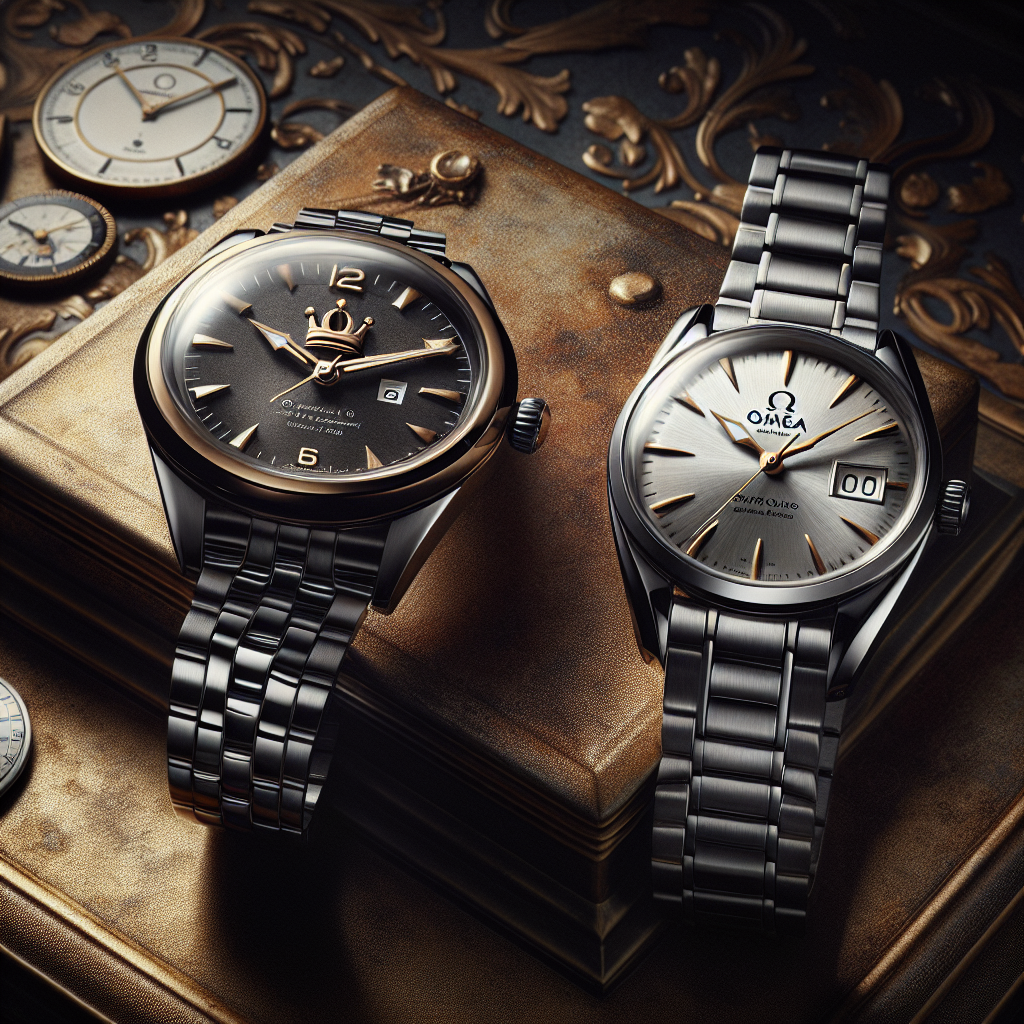
In the world of luxury watches, few names resonate as profoundly as Rolex and Omega. These watchmakers not only represent the pinnacle of horological craftsmanship but also symbolize status, elegance, and a commitment to excellence. For avid collectors and casual wearers alike, the debate over which brand reigns supreme is as enduring as the watches themselves. This article delves into the history, innovations, craftsmanship, brand perception, and market value of both brands, providing a comprehensive analysis of how Rolex and Omega stack up against each other.
Historical Background
Rolex: The Pioneer of Prestige
Founded in 1905 by Hans Wilsdorf and Alfred Davis in London, Rolex quickly established itself as a brand synonymous with precision and luxury. The invention of the Oyster case in 1926 marked a significant milestone; it was the world’s first waterproof watch, setting the stage for Rolex’s reputation for durability and reliability.
Rolex’s connections with exploration and adventure further bolstered its legacy. The brand’s watches accompanied Sir Edmund Hillary and Tenzing Norgay to the summit of Mount Everest in 1953. Additionally, Rolex became the official timekeeper for various sports, including tennis and golf, enhancing its visibility and prestige.
Omega: The Space Traveler
Omega, established in 1848 by Louis Brandt in La Chaux-de-Fonds, Switzerland, has its own illustrious history. Notably, Omega made history by being chosen as the first watch worn on the moon during the Apollo 11 mission in 1969. The Speedmaster Professional, commonly known as the “Moonwatch,” became an icon and a testament to Omega’s reliability under extreme conditions.
While Rolex carved a niche in luxury and prestige, Omega made strides in technological innovation. Omega was the first watch brand to receive the Swiss Federal Institute of Metrology’s certification for its movements, further solidifying its reputation for precision.
Innovations and Technological Advancements
Rolex: The Master of Mechanical Excellence
Rolex is renowned for its in-house movements, which are known for their robustness and precision. The brand’s continuous advancements include:
-
Chronometer Certification: Rolex movements undergo rigorous testing by the Swiss Official Chronometer Testing Institute (COSC), ensuring they maintain exceptional timekeeping performance.
-
Cerachrom bezel: Introduced in the early 2000s, this exclusive ceramic material is resistant to scratches and fading, enhancing the watch’s durability.
-
Rolex Parachrom hairspring: Introduced in 2005, this innovative accessory offers greater resistance to temperature changes, magnetic fields, and shocks, enhancing the overall reliability of their watches.
Omega: Breaking Barriers
Omega’s innovations are equally impressive, with notable breakthroughs like:
-
Co-Axial Escapement: This technology, patented in 1999, reduces friction between the components of the movement, enhancing accuracy and reducing the need for maintenance.
-
Master Chronometer Certification: In partnership with METAS, Omega introduced this certification in 2015, which tests watches for precision, magnetic resistance, and overall performance, demonstrating commitment to excellence.
-
Lightweight materials: Omega frequently explores new materials, such as ceramics and grade 5 titanium, pushing the boundaries of design and functionality.
Craftsmanship and Aesthetics
Rolex: Timeless Design
Rolex’s design philosophy revolves around timelessness and simplicity. The brand’s watches often feature clean lines, classic dials, and understated elegance. Iconic models like the Submariner, Daytona, and Datejust are characterized by their longevity in design trends.
Omega: Bold Innovation
In contrast, Omega embraces boldness and creativity in its designs. The Seamaster and Speedmaster collections depict distinct styles that resonate with diverse audiences. The Speedmaster’s tachymetric scale and the Seamaster’s wave-pattern dials exemplify Omega’s willingness to innovate, while remaining rooted in tradition.
Brand Perception and Market Value
Rolex: The Status Symbol
Rolex is perceived as more of a status symbol than Omega. Its high resale value, limited production runs, and iconic associations give it an exclusive allure. The brand is often the subject of speculation in the luxury watch market, where some models appreciate significantly over time.
Omega: The Innovative Challenger
Omega, while not as universally perceived as a status symbol, commands respect for its engineering prowess and adventure heritage. Watches like the Planet Ocean and Speedmaster are highly sought after, and Omega’s collaborations, such as with the James Bond franchise, have solidified its cultural significance. While Omega watches typically don’t appreciate as much as Rolex’s, they maintain a solid market presence.
Price Point and Accessibility
Rolex watches are generally priced higher than their Omega counterparts. Entry-level Rolex models start around $5,000 and can exceed $100,000 for limited editions or gold models.
Omega, however, offers a more approachable range, with entry-level models starting at around $2,500, extending to $15,000 for premium models. This accessibility allows Omega to reach a broader audience of watch enthusiasts.
Conclusion: A Matter of Personal Preference
In the battle between Rolex and Omega, each brand brings its own strengths to the table. Rolex represents luxury, reliability, and timeless design, while Omega shines with innovation, bold designs, and a storied history of exploration.
Choosing one over the other often boils down to personal preference and what individuals value in a luxury watch. For some, the prestige of Rolex is unbeatable. For others, Omega’s innovative spirit is more appealing. Regardless of the choice, both brands offer exceptional timepieces that showcase the artistry of watchmaking. Ultimately, the debate will continue, as both brands embody the spirit of horological excellence and carry their legacies into the future.